LAB Facility

The laboratory is located in the William G. Davis Building, University of Toronto Mississauga.

Imaging systems

From the helicopter, and from the ground at Koffler Scientific Reserve.
Helicopter

Airborne hyperspectral imaging

Micro-Hyperspec VNIR imaging spectrometer, Headwall Photonics

A push-broom hyperspectral imager flown on a helicopter. It records a full spectrum for every pixel, and was used to map plant traits, species and drought responses across the grassland at Koffler Scientific Reserve.

  • 325 spectral bands, 400–1000 nm, about 2 nm spectral resolution, 12-bit
  • About 0.2 m pixels, flown about 200 m above the ground
  • Flown on a JetRanger helicopter
Fixed-wing UAV

UAV hyperspectral imaging

Lightweight hyperspectral imager, Headwall Photonics

A lightweight hyperspectral imager carried by a fixed-wing UAV. The UAV and the imager were integrated in 2015, and the first hyperspectral images were taken in October that year.

Funded by the Canada Foundation for Innovation and the Ontario Research Fund.

Multirotor UAV

UAV multispectral imaging

Two drones, each with a multispectral sensor and an RGB camera

Used mainly for vegetation monitoring and remote sensing. The green, red, red edge and near-infrared bands are used to calculate vegetation indices such as NDVI, which show how green and vigorous plants are. The images are calibrated with the lab’s reflectance panels and georeferenced with its RTK base stations, so surveys flown on different dates can be compared.

  • Multispectral bands: green, red, red edge and near-infrared
  • Visible RGB camera
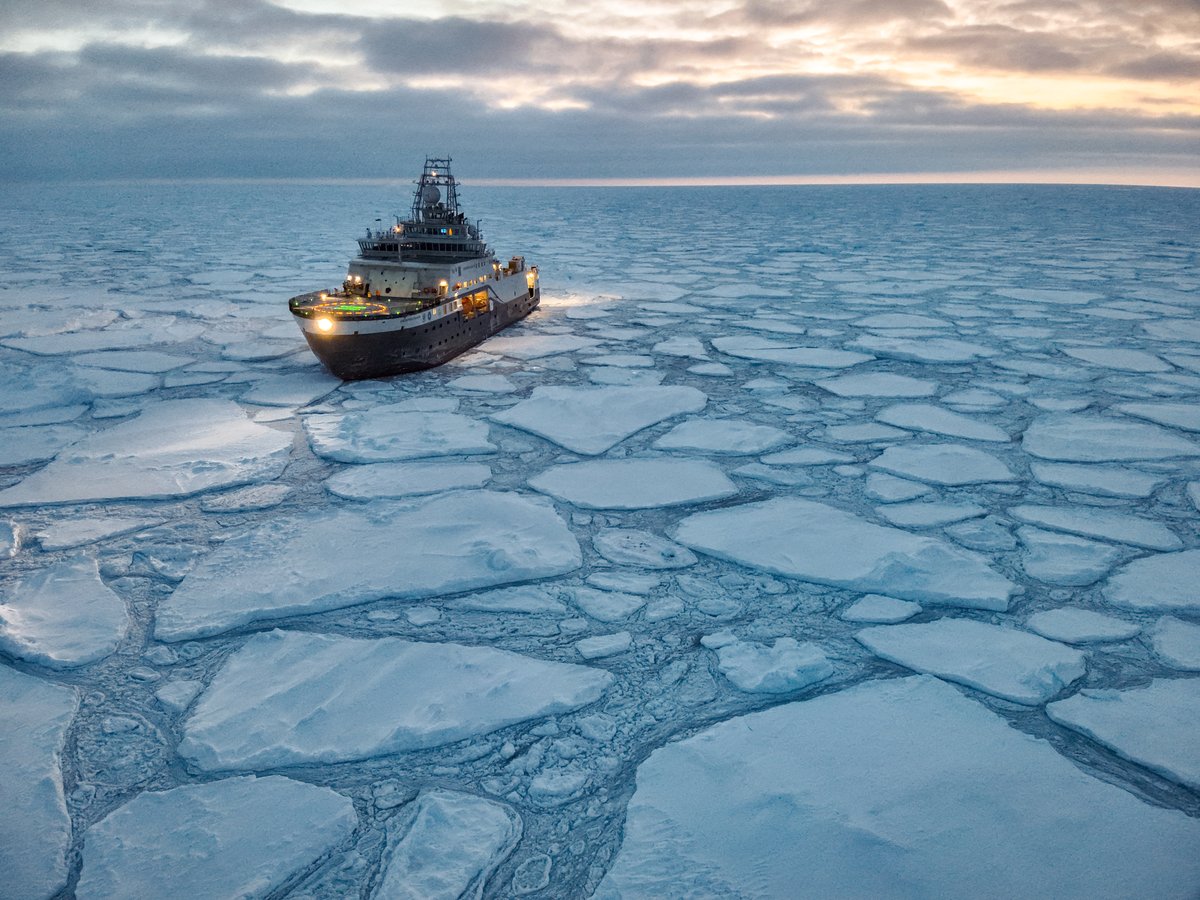
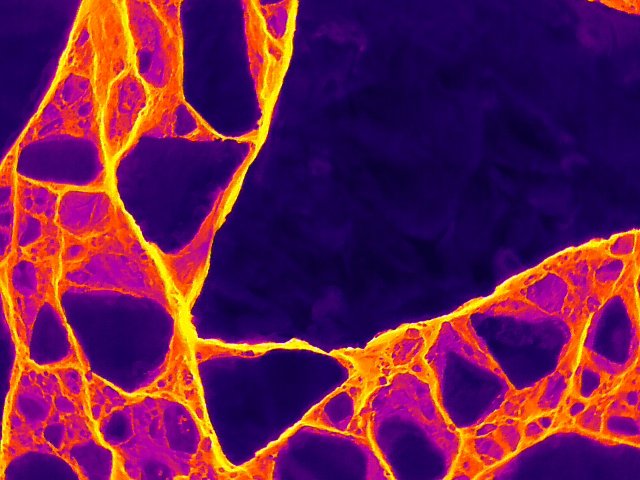
An icebreaker among Arctic sea ice floes, photographed from the thermal droneArctic sea ice in thermal infrared: cold floes, with warmer water in the cracks between them
Arctic sea ice from the thermal drone, in visible light and in thermal infrared. Photo credit: Alexandra Stephens
Multirotor UAV

UAV thermal imaging

One drone with a thermal infrared sensor and an RGB camera

Used mainly for surface temperature measurements and thermal monitoring, in projects on vegetation and vegetation health, urban environments, infrastructure monitoring and Arctic sea ice.

  • Thermal infrared sensor
  • Visible RGB camera
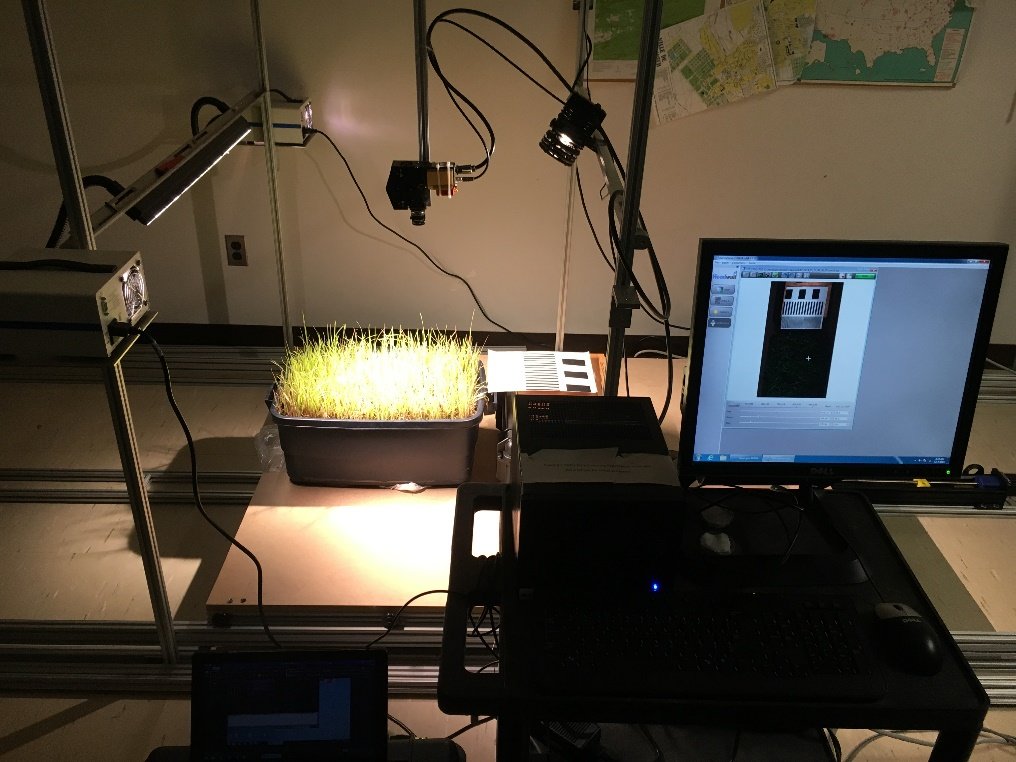
A tray of grass under the hyperspectral imager and lights of the linear stage, with the control computer
Laboratory

Close-range hyperspectral imaging system

Micro A-series imager, Headwall Photonics, on a motorized linear stage

Built in the lab to take hyperspectral images of plants indoors. A tray of plants moves under the imager on the linear stage, and each pass produces a hyperspectral image of the whole tray. It was used to follow drought stress in grasses grown in the UTM greenhouse, imaging every tray every three days.

  • 325 spectral bands, 400–1000 nm, 12-bit CCD
  • 48.7° field of view, 0.7 mm pixels across an 80 cm scan
  • Linear slide moving at 12–180 cm per minute, with about 300 lb of thrust
  • Two 150 W halogen light sources, and a white reference panel in every scan

Described in Proctor, C., Dao, P. D., & He, Y. (2021). Close-range, heavy-duty hyperspectral imaging for tracking drought impacts using the PROCOSINE model. Journal of Quantitative Spectroscopy and Radiative Transfer, 263, 107528.

Field and laboratory instruments

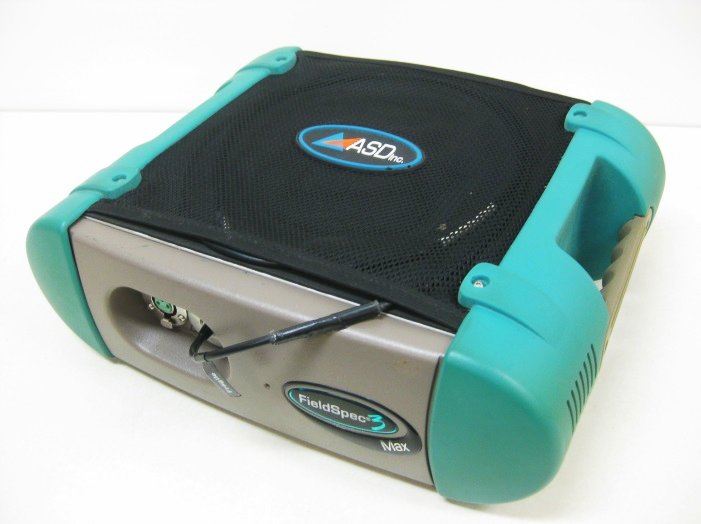
The ASD FieldSpec 3 spectroradiometer
Spectroradiometer

ASD FieldSpec 3

Portable spectroradiometer, ASD (Malvern Panalytical)

Measures the reflectance spectra of leaves, canopies and soils, in the field and in the lab. In the field it is carried in a backpack with a laptop, and the fibre-optic cable ends in a pistol grip.

  • 350–2500 nm
  • 1.5 m fibre-optic cable with pistol grip, and a white reference panel
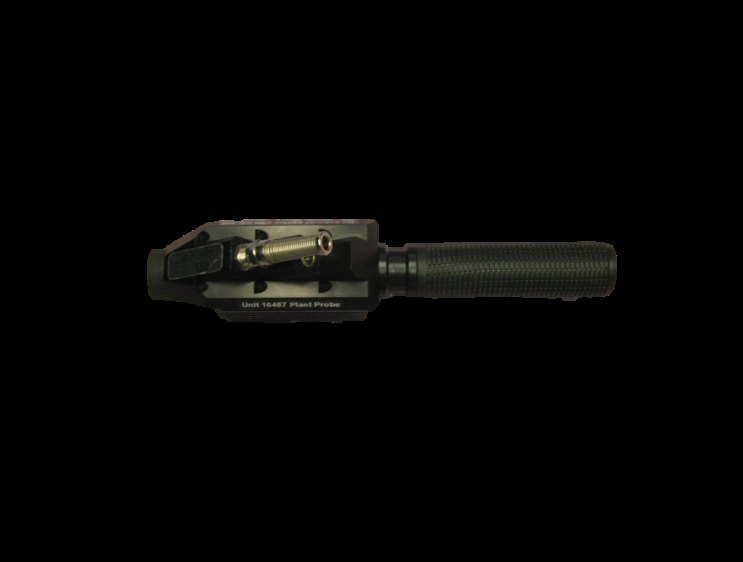
The ASD Plant Probe with its leaf clip
Leaf reflectance

ASD Plant Probe and leaf clip

Contact probe for the FieldSpec 3, ASD (Malvern Panalytical)

Measures the reflectance of single leaves with the FieldSpec 3. The probe has its own light source, so measurements do not depend on the sunlight.

  • Contact probe and leaf clip
  • White and black reference panels in the clip
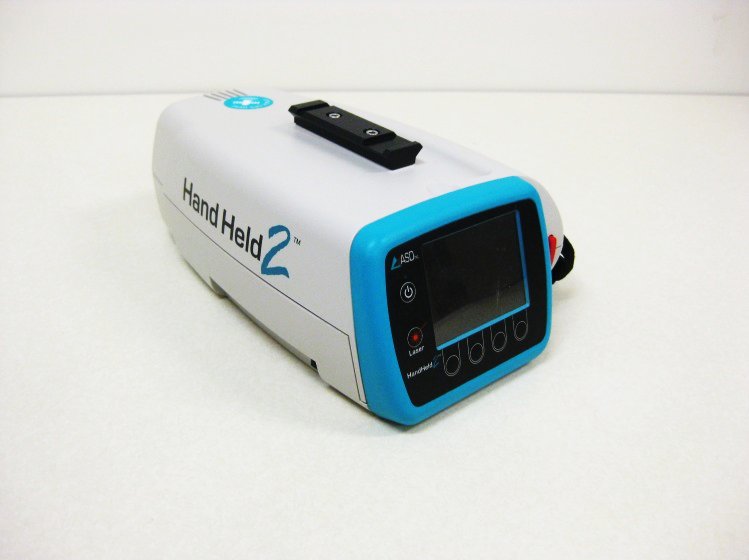
The ASD FieldSpec HandHeld 2 spectroradiometer
Spectroradiometer

ASD FieldSpec HandHeld 2

Hand-held spectroradiometer, ASD (Malvern Panalytical)

A compact hand-held spectroradiometer for quick reflectance measurements in the field.

  • 325–1075 nm
  • About 2.5 hours on rechargeable batteries, 5 hours on lithium batteries
  • White reference panel
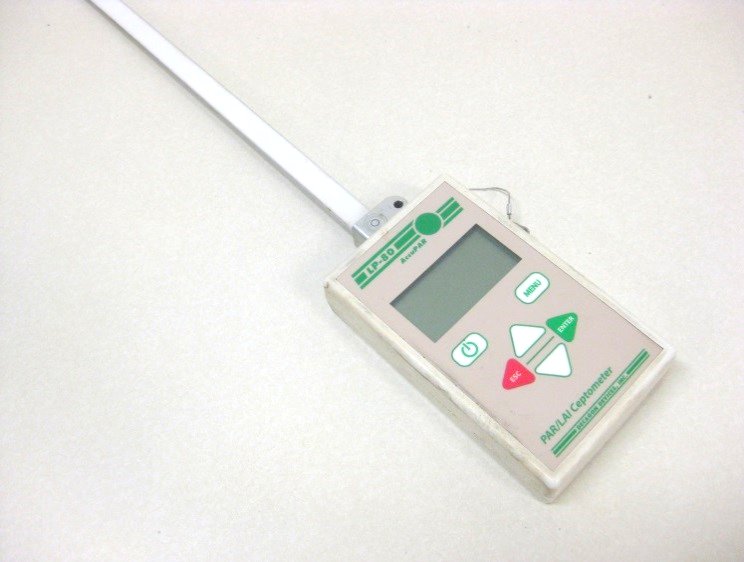
The AccuPAR LP-80 ceptometer with its probe
Leaf area index

AccuPAR LP-80 ceptometer

METER Group

Measures photosynthetically active radiation above and below the canopy, and calculates the leaf area index on the spot.

  • Photosynthetically active radiation, 400–700 nm
  • Probe range 0–2500 µmol m−2 s−1
  • External sensor for simultaneous above-canopy readings
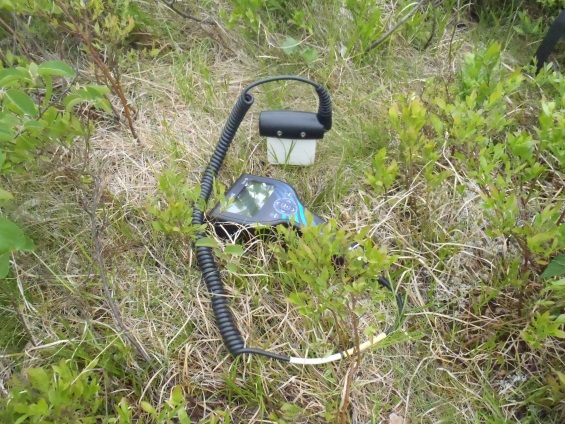
The HydroSense II display and its soil moisture probe on the ground during wetland fieldwork
Soil moisture

HydroSense II soil moisture sensor

Campbell Scientific

Measures the volumetric water content of soil, and records the GPS position of every reading.

  • 0–50% volumetric water content, 3% typical accuracy
  • 12 cm rods
  • Onboard GPS, and Bluetooth for downloading the readings
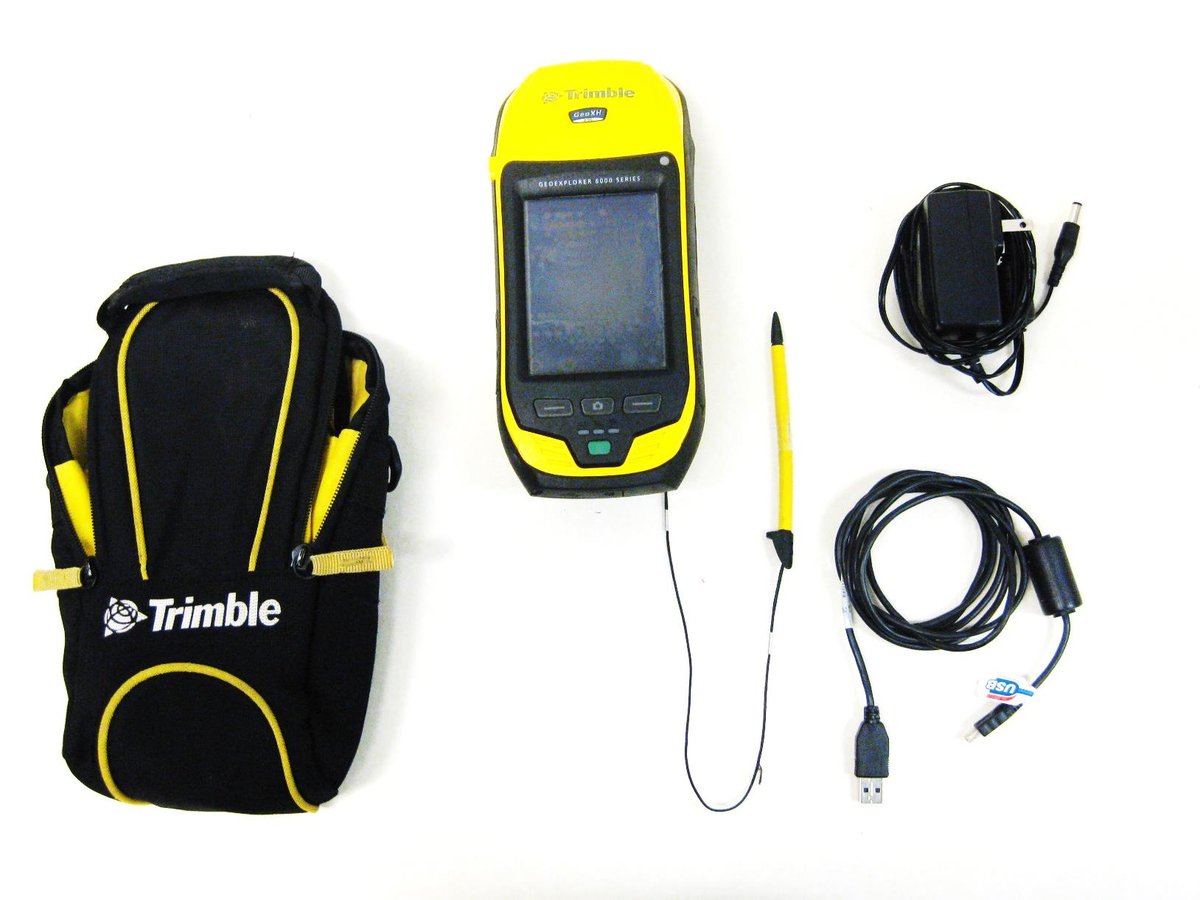
The Trimble GeoExplorer 6000 receiver with its case and accessories
Positioning

Trimble GeoExplorer 6000 series

Hand-held GNSS receiver, Trimble

A hand-held GNSS receiver for locating plots and sampling points, set up with ArcPad 10 for recording coordinates in the field.

  • Built-in camera
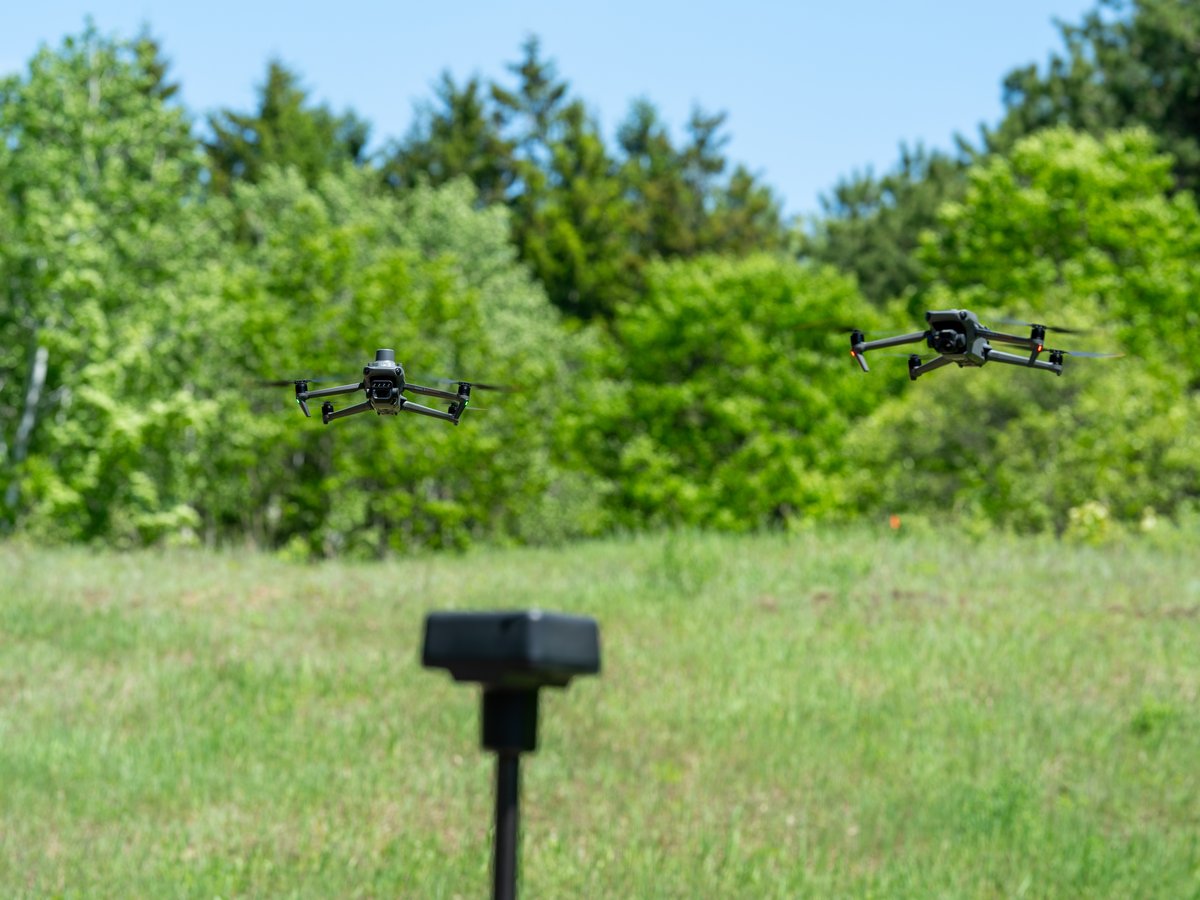
An RTK base station on a pole in a grassy field, with two drones flying behind it
Positioning

RTK base stations

Improve the positional accuracy of drone surveys. Their high-accuracy georeferencing supports more precise mapping and spatial measurements, and the comparison of data collected at different times.

  • High-accuracy georeferencing for drone surveys
  • Two units
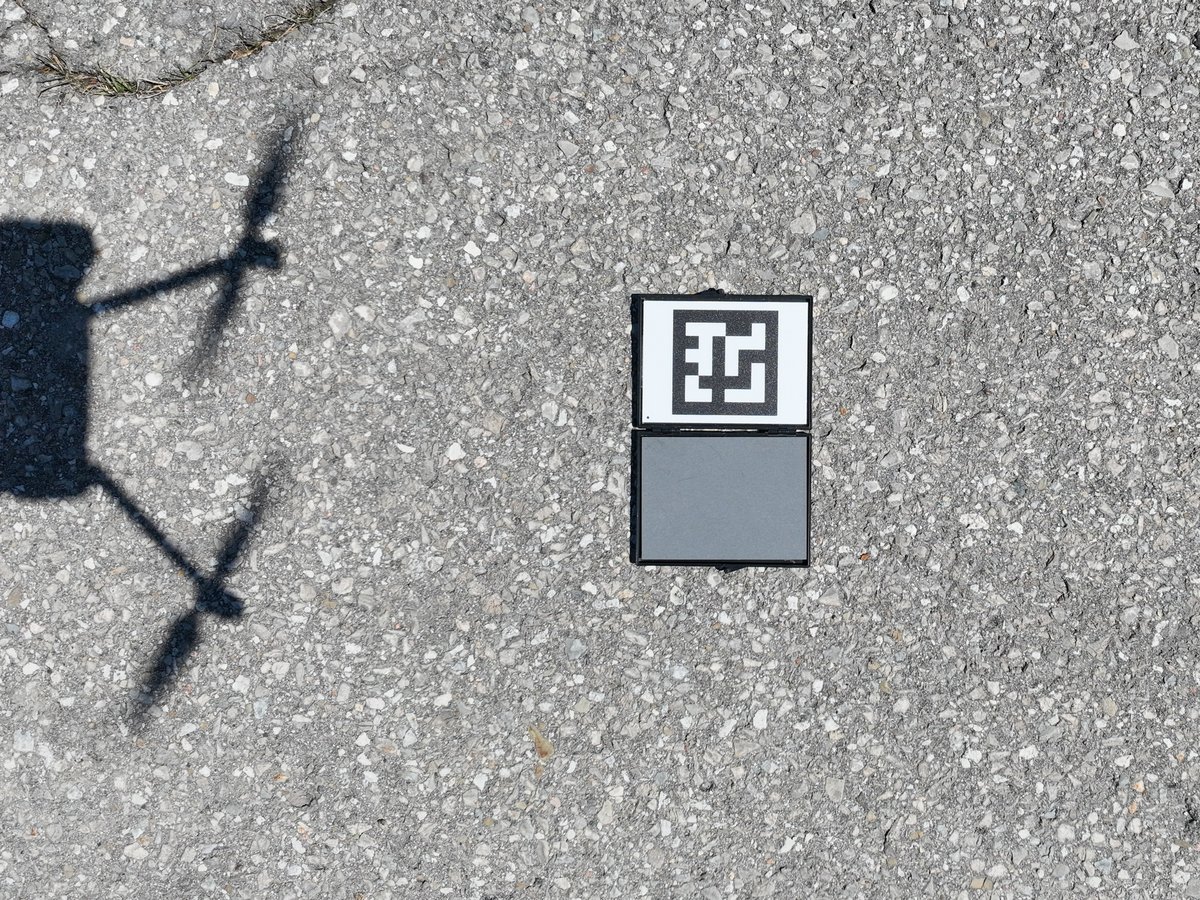
A calibrated reflectance panel on the ground, photographed from a drone whose shadow falls beside it
Calibration

Calibrated reflectance panels

Sentera

Used to calibrate multispectral images before or after drone surveys. Their known reflectance lets the measurements be converted into consistent surface reflectance, which matters when vegetation is compared across survey dates or conditions.

  • Known reference reflectance values
  • Two units
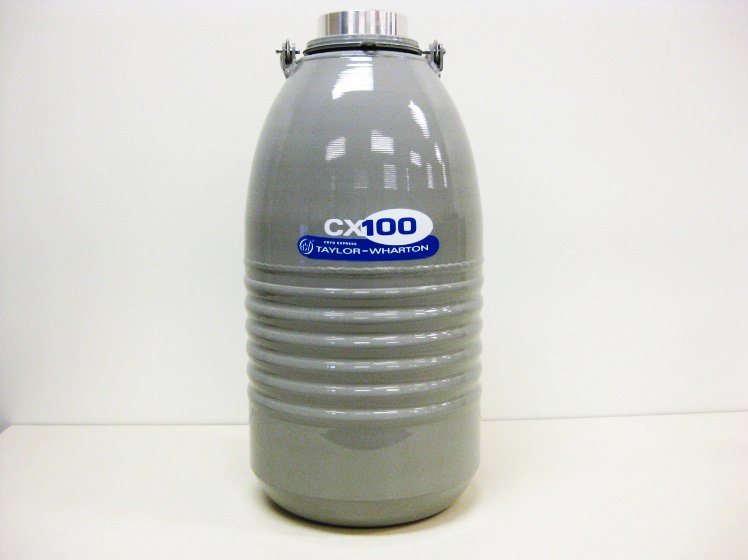
The Taylor-Wharton CX100 dry shipper
Sample transport

Taylor-Wharton CX100 dry shipper

Keeps samples frozen in liquid-nitrogen vapour on the way from the field to the lab.

  • Metal dewar in a hard-shell shipping case
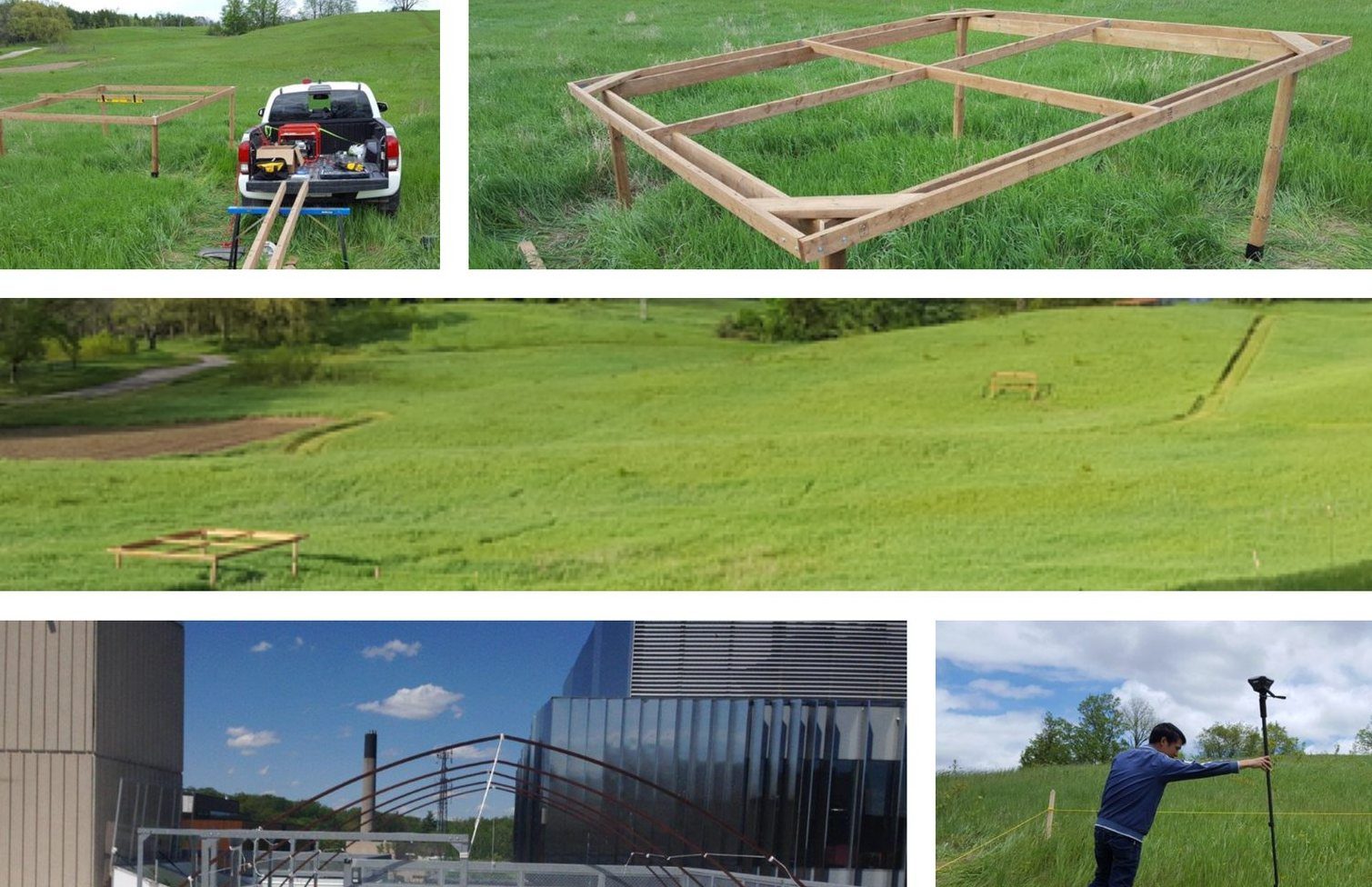
Wooden rain-out shelter frames in a grassland field, a shelter frame at the university and a team member holding a survey pole
Field experiments

Rain-out shelters

Built by the lab to keep rain off grassland plots in drought experiments, so that the effect of drought on plants can be followed with field measurements and remote sensing.

  • Set up in the field and at the university in June 2017
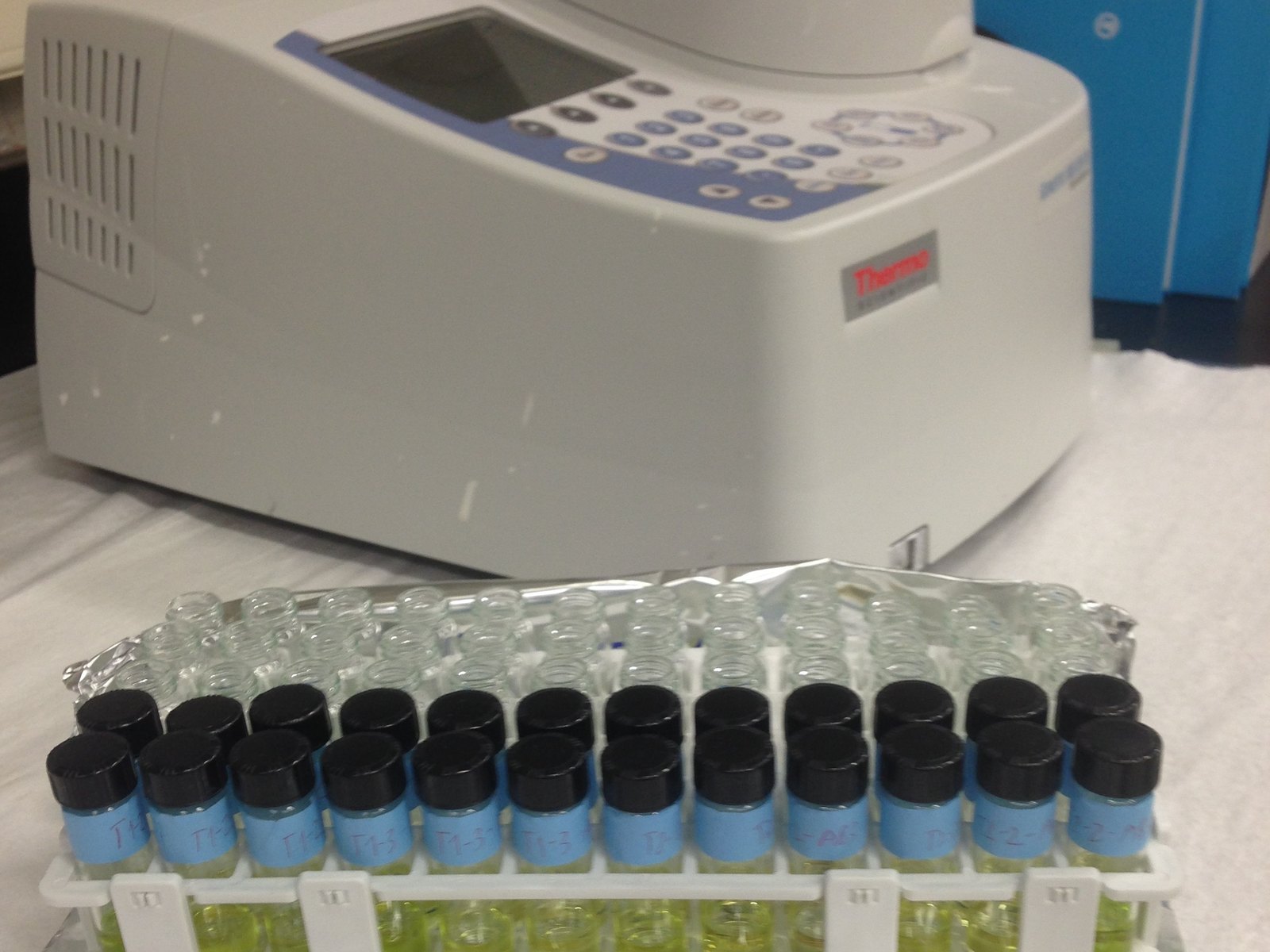
A Thermo Scientific spectrophotometer on a lab bench, with a rack of labelled vials of leaf pigment extracts
Leaf chemistry

Leaf pigments and water content

Spectrophotometer, Thermo Scientific

Leaf samples are analysed in the lab for their pigments and water content, to check what the spectra and images show.

  • Chla+b: total chlorophylls
  • Cx+c: total carotenoids
  • Leaf water content

Also in the lab: computing facilities and software packages.

Laboratories

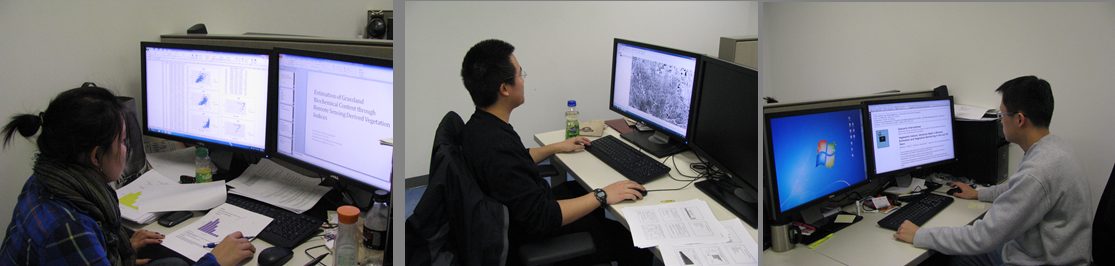
Lab members working at the workstations of the computational laboratory
DV3207

Computational laboratory

Five computer workstations with professional remote sensing software, including the Geomatica Total Educational Suite and eCognition Developer.

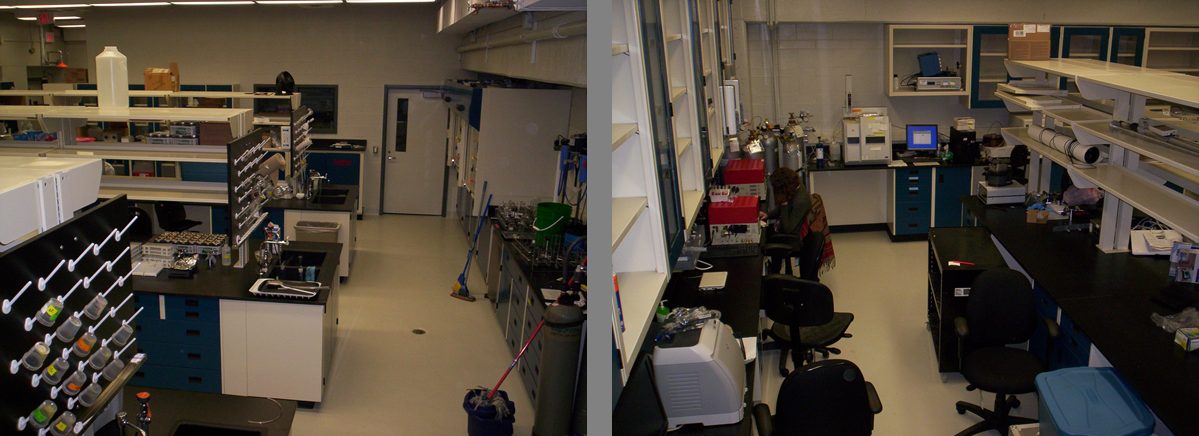
The shared analytical laboratory with sample-preparation benches
DV1079

Analytical laboratory

A recently renovated collaborative laboratory, shared with three PIs, for preparing and analysing vegetation, soil and water samples: sorting, identification and preparation for biochemical analysis.

Photo credit: Ken Turner